Activity Report
Event Report: Sagamihara Global Future Session 2026 — Government, Business, Universities, and Residents on Living Together
On September 6, 2026, with the support of Sagamihara City, we held a session at Unicom Plaza Sagamihara. Speakers from local government, a company, a university, and a residents' group shared their views, and participants discussed concrete ideas in groups. Here is a summary of what we heard.
 By Eric (Yutaro Akami)Representative Director, NPO Red LookPublished: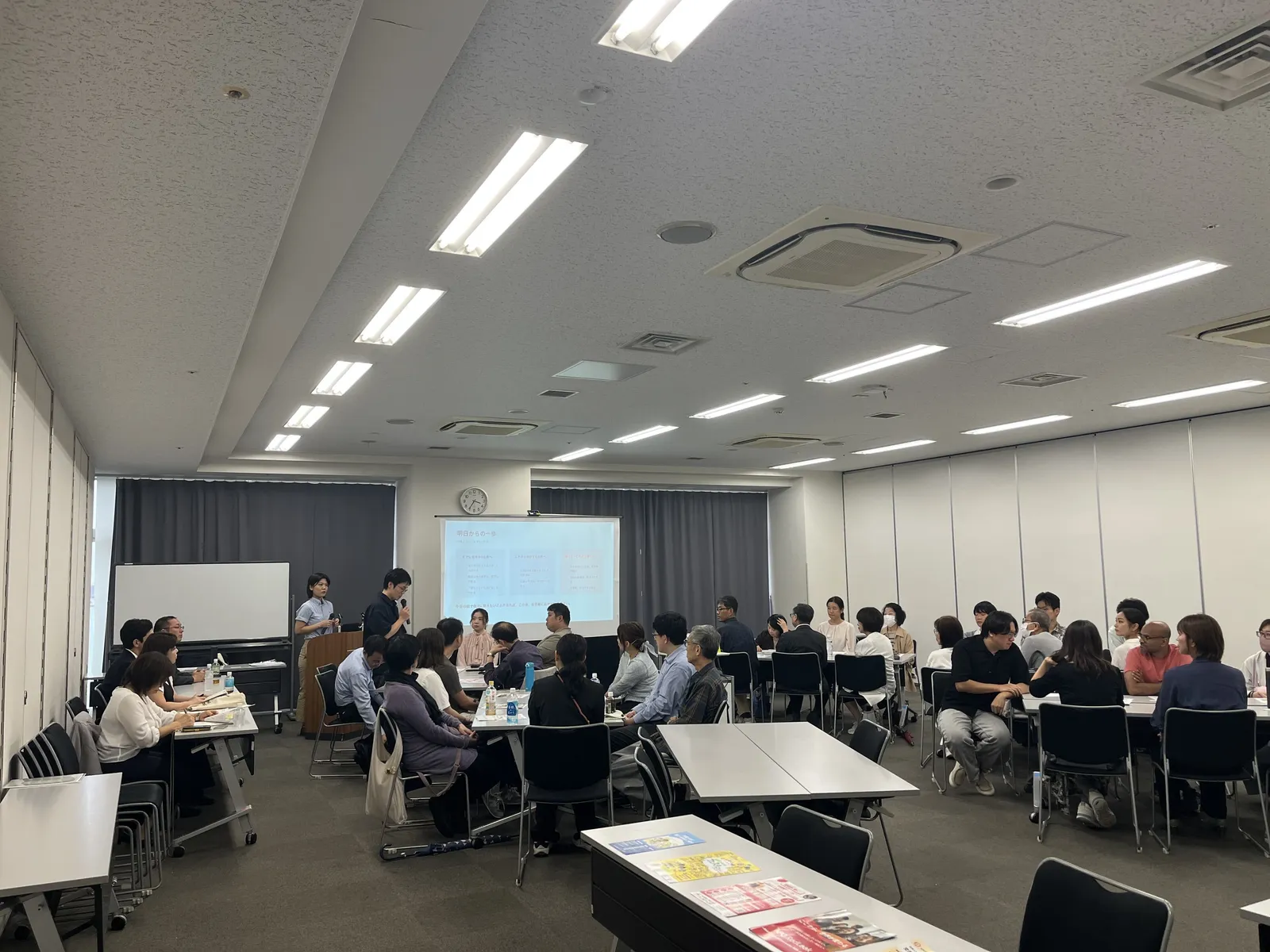
Contents
On Sunday, September 6, 2026, NPO Red Look held the Sagamihara Global Future Session 2026 at Unicom Plaza Sagamihara (Seminar Room 1). With the support of Sagamihara City, speakers representing four perspectives — local government, business, a university, and local residents — shared their experiences, and participants then split into groups to discuss concrete ways to make Sagamihara more international.
Thank you to all the speakers and participants. This article summarizes the session and what we heard in the workshop.
Overview
| Item | Details |
|---|---|
| Date | Sunday, September 6, 2026, 14:00–16:00 |
| Venue | Unicom Plaza Sagamihara, Seminar Room 1 |
| Organizer | NPO Red Look |
| Supported by | Sagamihara City |
| Fee | Free |
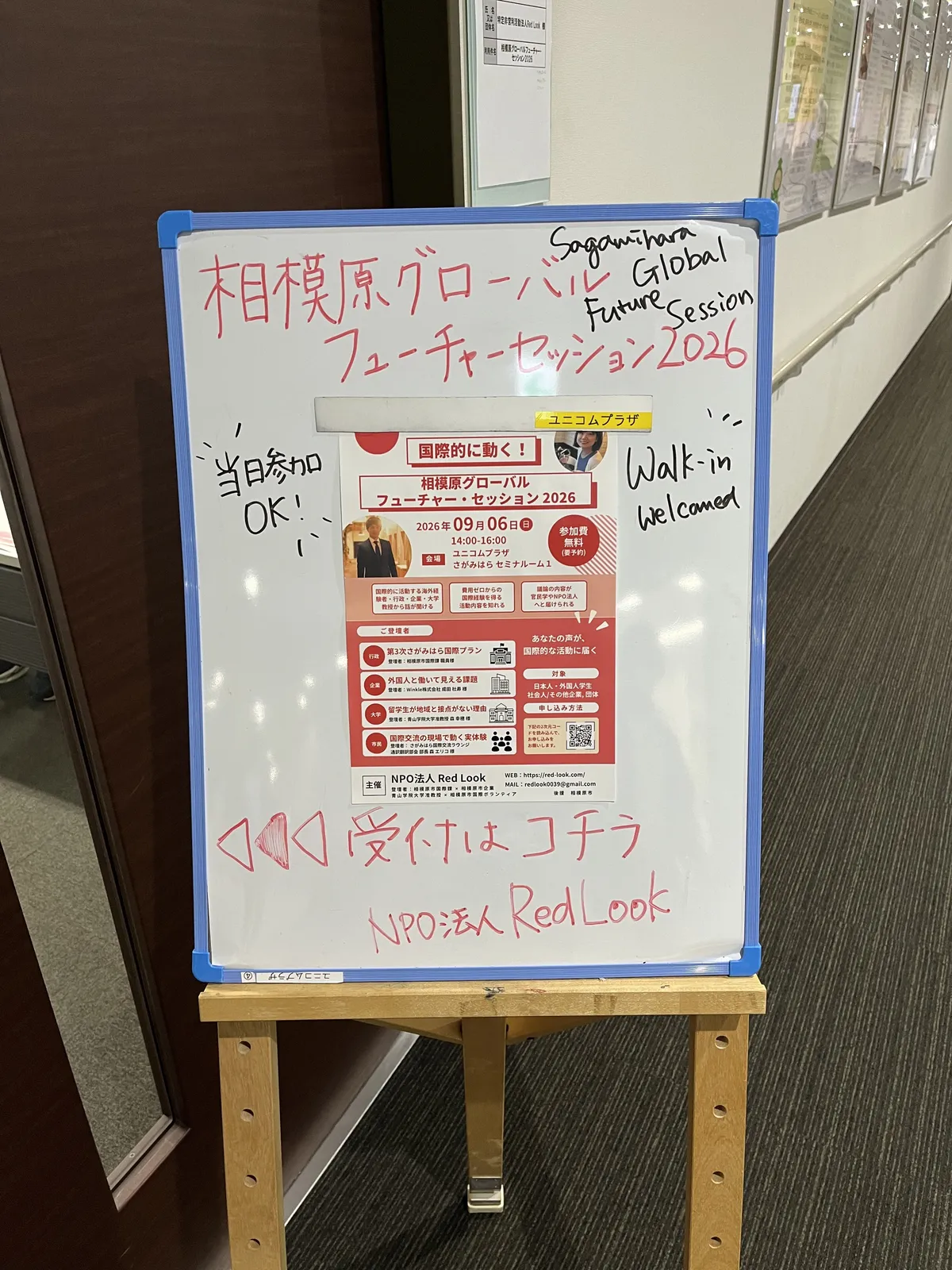 The sign at the entrance — walk-ins were welcome
Four perspectives
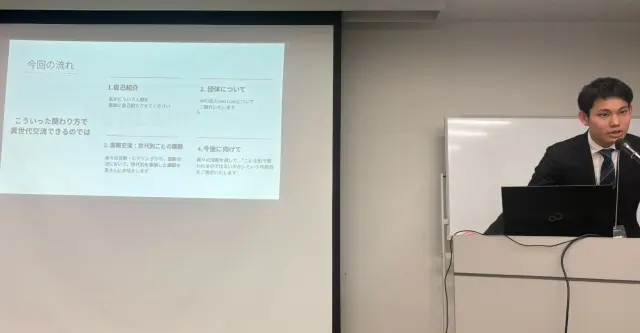
In the first half, four speakers shared what they see on the ground:
- Local government: The Third Sagamihara International Plan (a staff member of the Sagamihara City International Division)
- Business: Challenges seen when working with international employees (Mr. Narita, Winkle Inc.)
- University: Why international students struggle to connect with the local community (Associate Professor Yukiho Mori, Aoyama Gakuin University)
- Residents: Hands-on experience in international exchange (Eriko Mori, head of the interpreters and translators group, Sagamihara International Lounge)
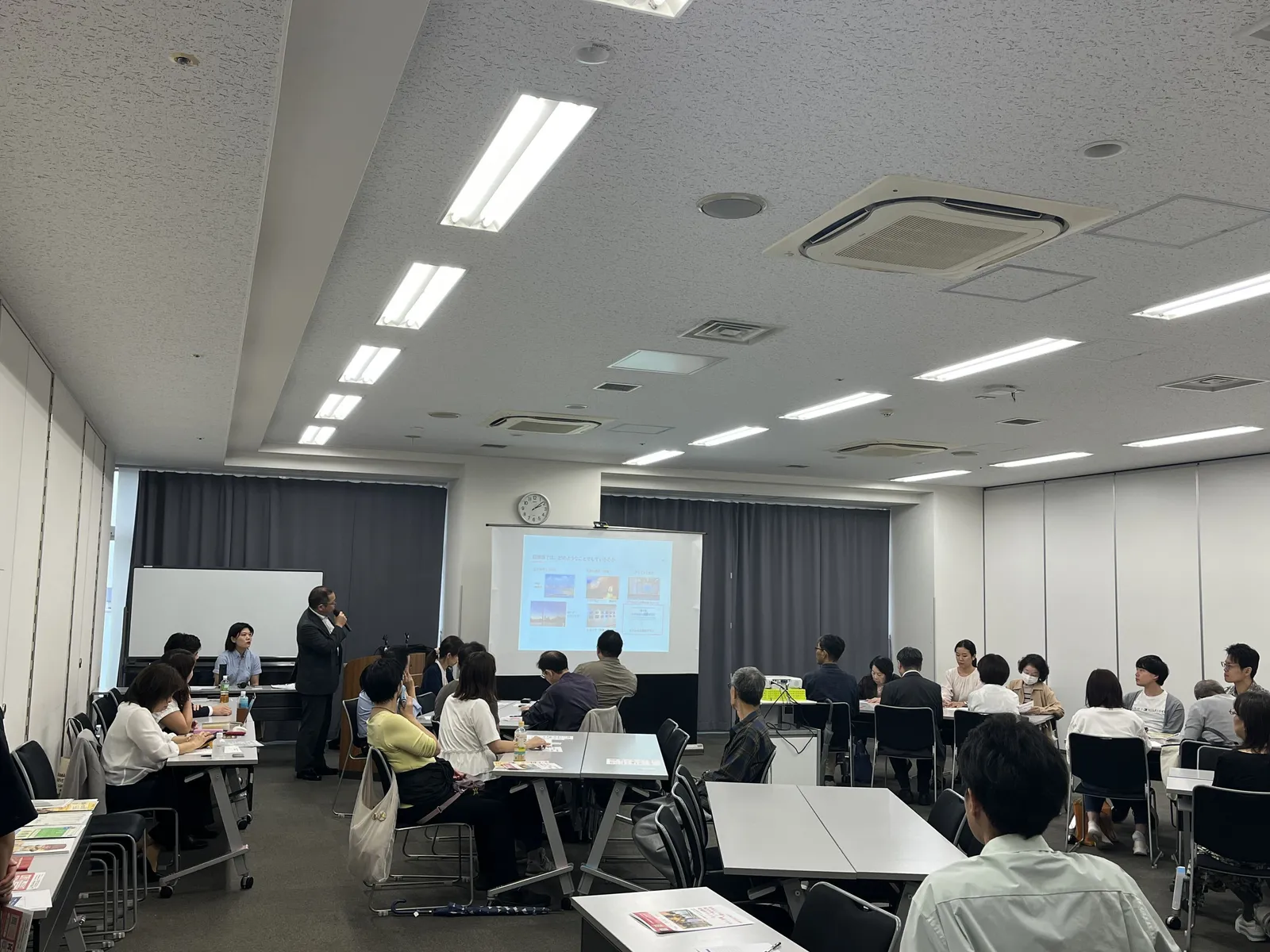 Local government: the Third Sagamihara International Plan
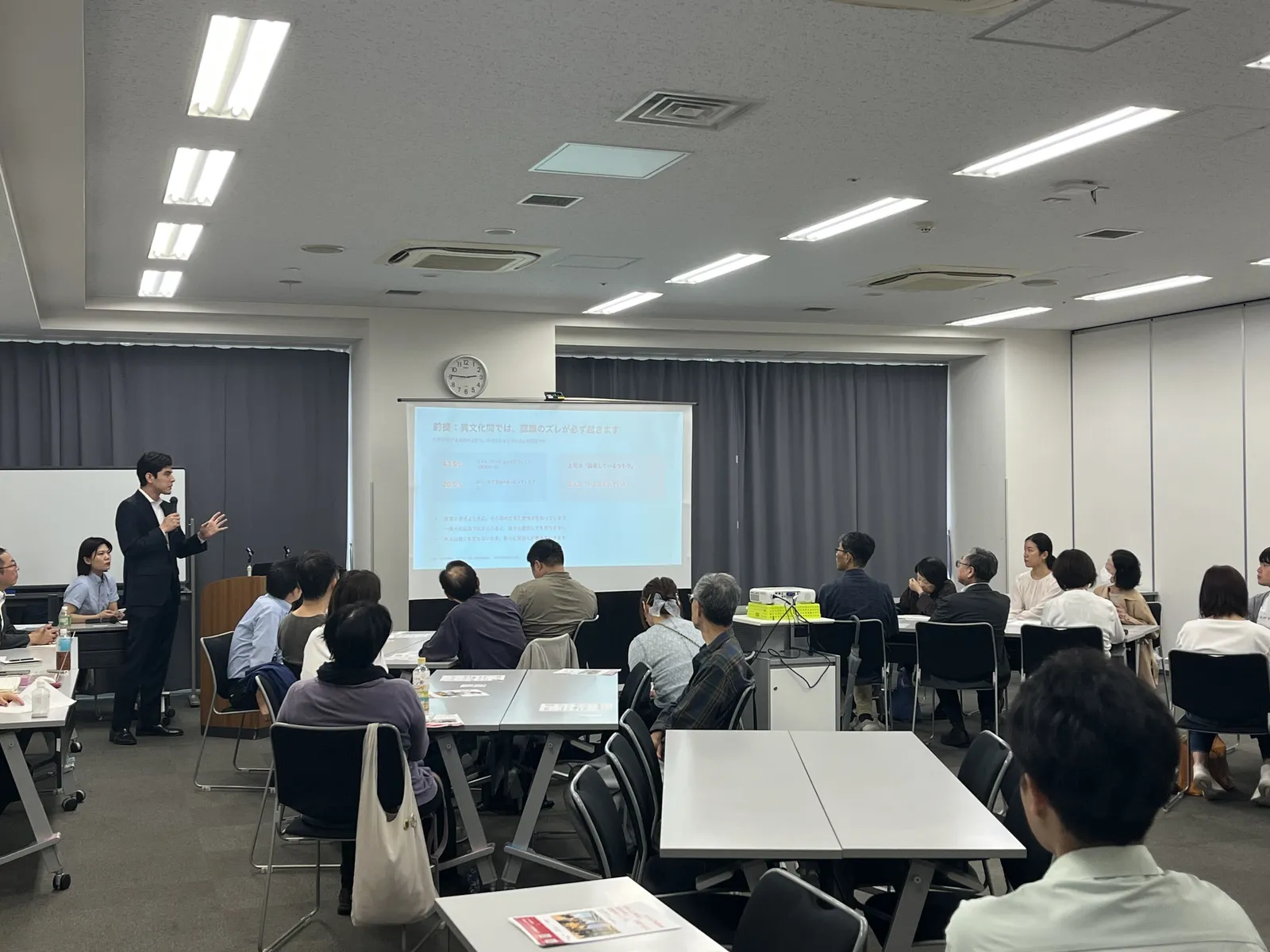 Business: Mr. Narita, Winkle Inc.
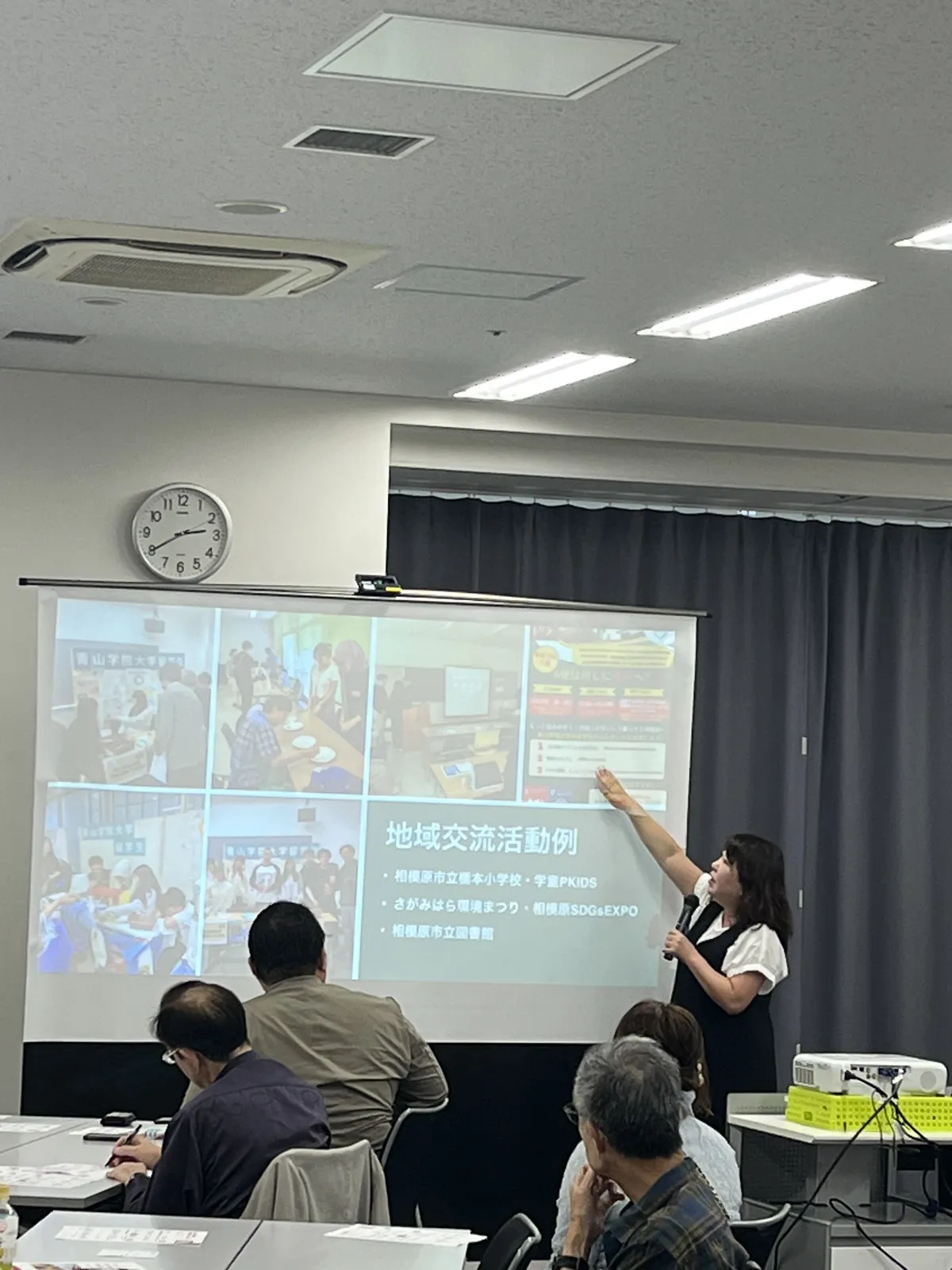 University: Associate Professor Yukiho Mori, Aoyama Gakuin University
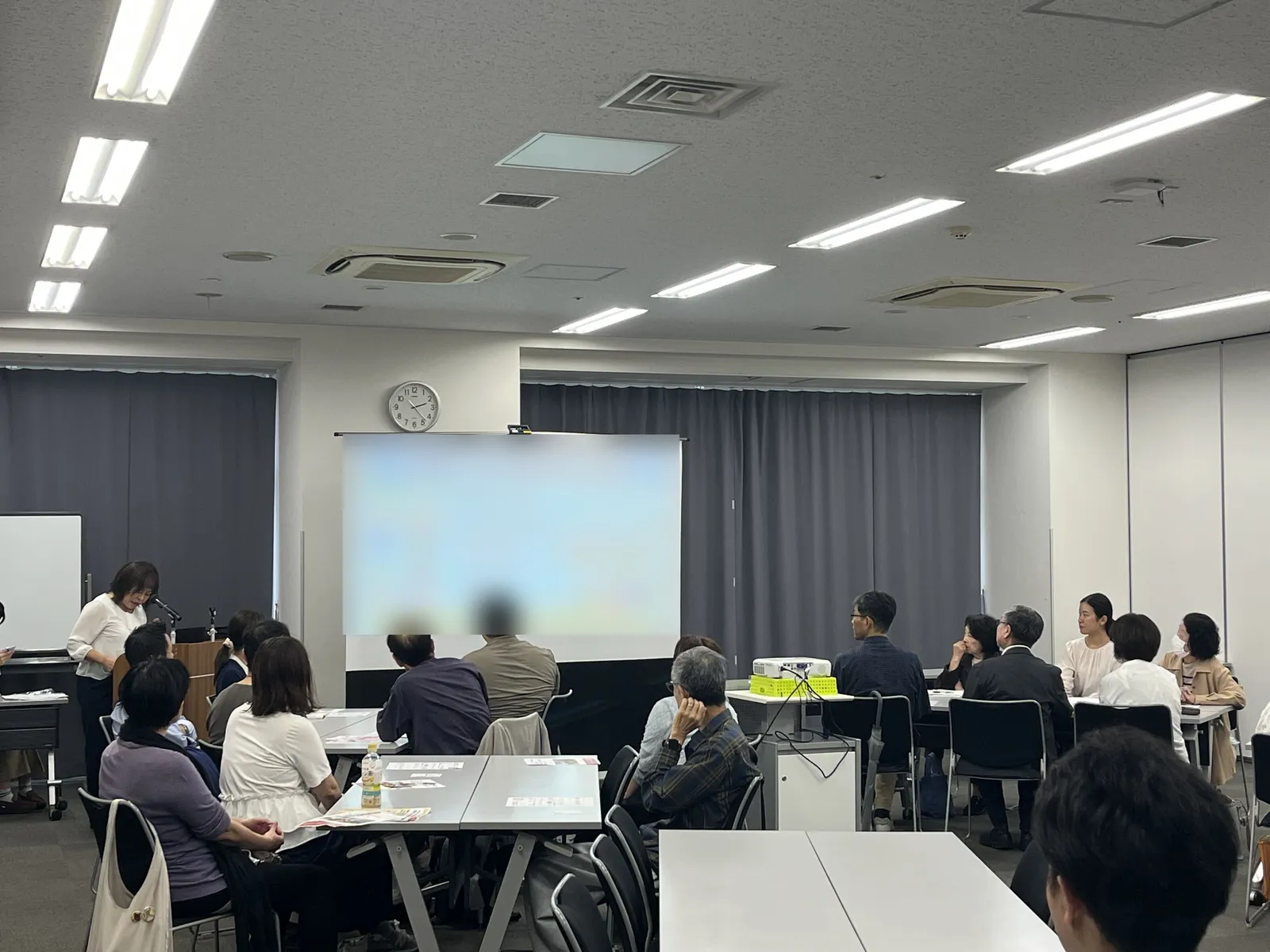 Residents: Eriko Mori, Sagamihara International Lounge
What we heard in the workshop
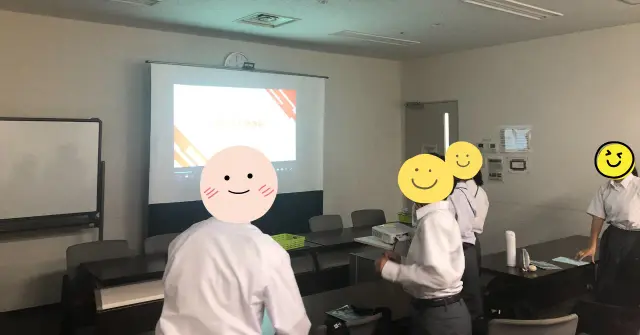
In the second half, participants from different backgrounds discussed ideas in mixed groups. Below is a summary of their worksheets by perspective (no individual names are included).
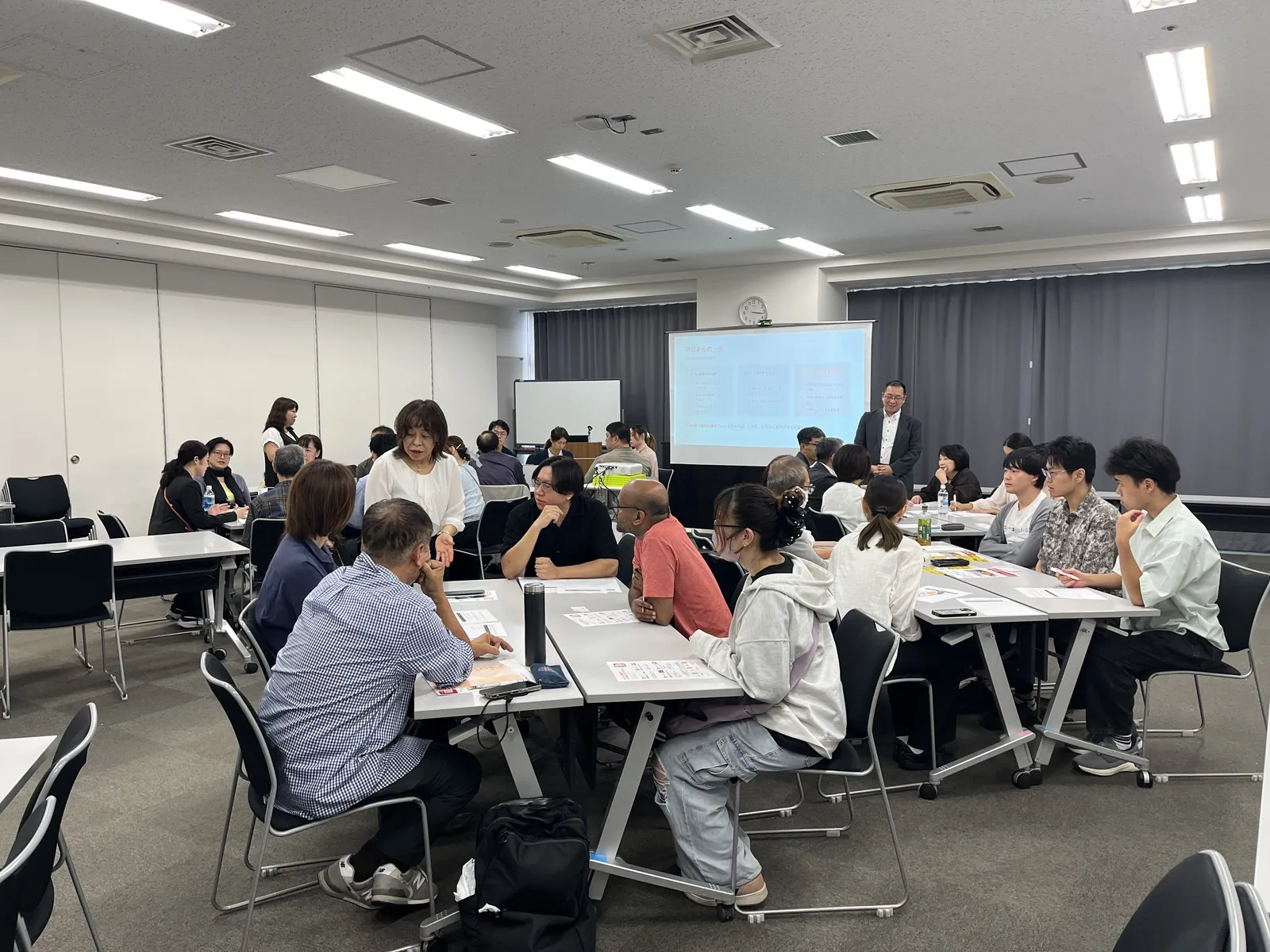 Mixed groups of government, business, university, and resident participants
On companies and the workplace
- Several participants were concerned that international employees may feel lonely or isolated outside work
- When companies try to teach employees whose Japanese is still developing, the Japanese colleagues doing the teaching can burn out first — and once gaps in support appear, they are hard to repair
- Holding back out of politeness ("it might be rude to say this") can lead to explanations that are too thin
- The Japanese side also needs to understand both management's intentions and the reality on the ground
- Companies should be clear about who they want to welcome, not just who wants to come
- Both "Japanese for work" and "Japanese for daily life" are needed
- Companies have plenty of room to contribute to local multicultural life, for example by sponsoring exchange events or sharing multilingual living information
From government, schools, and residents
- Government: Daily-life information in easy Japanese, promoting the International Lounge's living guidance, working with neighborhood associations (and the privacy barriers involved), and Sagamihara's particular character as a university city with a U.S. military base
- Schools: Increasingly diverse reasons for studying, exchange sparked by anime and manga, and still-limited exchange between students
- Residents: Connection that starts with a greeting, children bringing communities together, the value of regular events, and kindness as thinking about what the other person actually wants
Takeaway: coexisting and living together
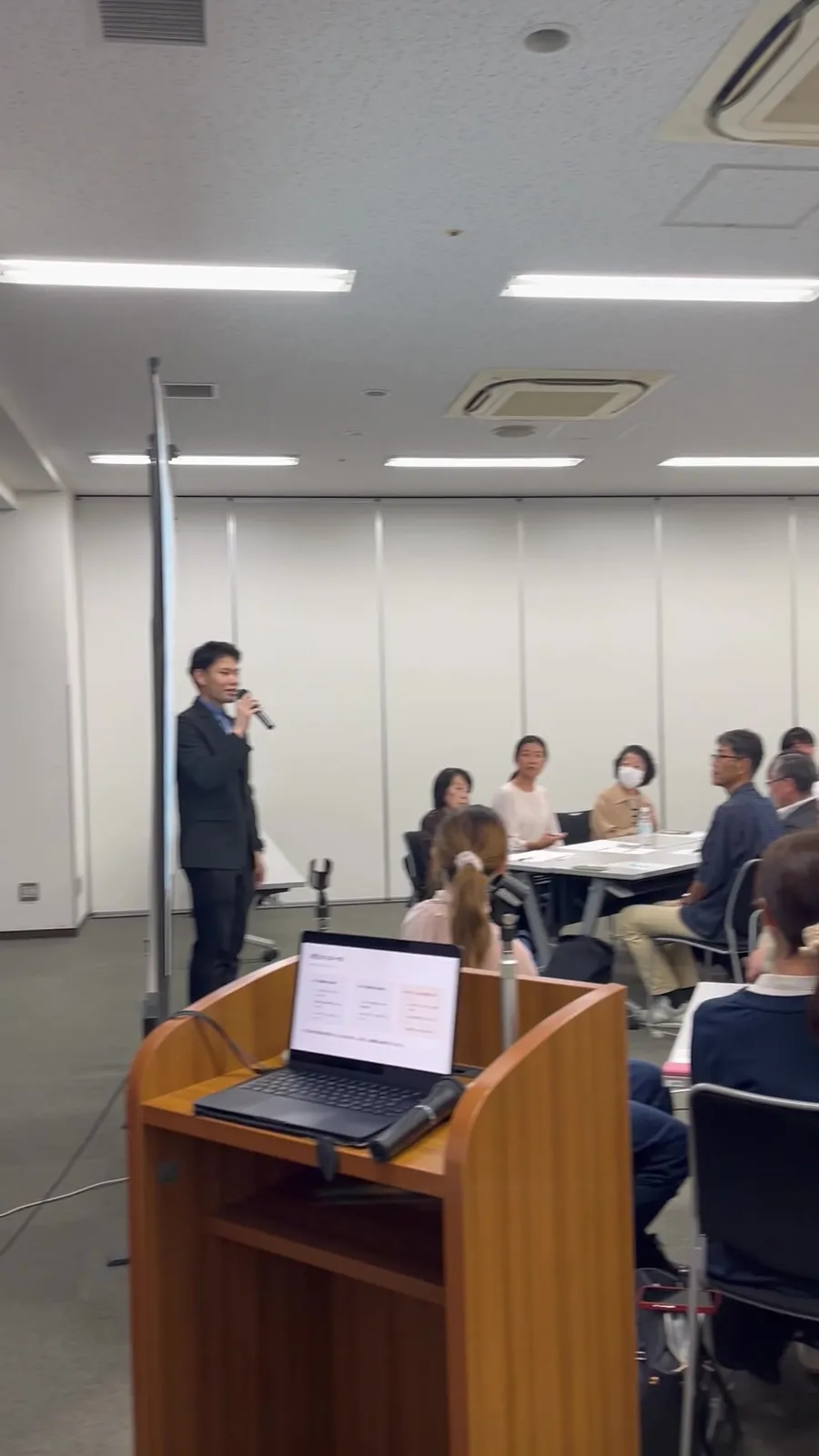 From the organizer, NPO Red Look
The discussion pointed to the need for both coexistence (respecting shared rules) and living together (understanding each other's backgrounds).
In particular, many participants said that the Japanese people who welcome newcomers also need international experience and places to meet as equals — not only the international residents themselves. Red Look will keep creating a third place in Sagamihara and Shibuya where Japanese and international people can meet as equals outside work and school.
We have compiled the workshop feedback into a report. If your company or organization is interested in creating places for employees to connect, or in local initiatives, please see our For Companies & Organizations page.
Our next in-person events
Red Look hosts small-group language exchange and social events in Shibuya and Sagamihara. Dates are announced on Meetup. See our In-Person Events page for details.
Where to go next
Meet face to face in Shibuya and Sagamihara
Small-group language exchange and social events for Japanese and international people. Mostly free, and easy to join on your own.
Not sure which fits you? Take our free career assessment (about 8 minutes)
Eric (Yutaro Akami)
Representative Director, NPO Red Look
Founded and ran international communities in Canada, Germany, and Japan. Established NPO Red Look in 2025 and serves as its Representative Director.
About Red Look