
Why Do So Many Foreign Workers Leave Japan Within 3 Years? The Structural Barriers Behind Retention
Around 35% of foreign talent is estimated to leave Japan within three years. This is not simply about personal preference—it reflects structural issues such as unwritten workplace rules, N1 as a barrier, and isolation after arrival. This article explains what needs to change for sustainable retention.
Japan increasingly needs foreign talent. At the same time, there is a worrying pattern: an estimated 35% of foreign workers leave Japan within three years. That does not mean they “do not like Japan.” In many cases, the reason is not personal motivation at all. The real issue is that the system around them is not built for long-term retention.
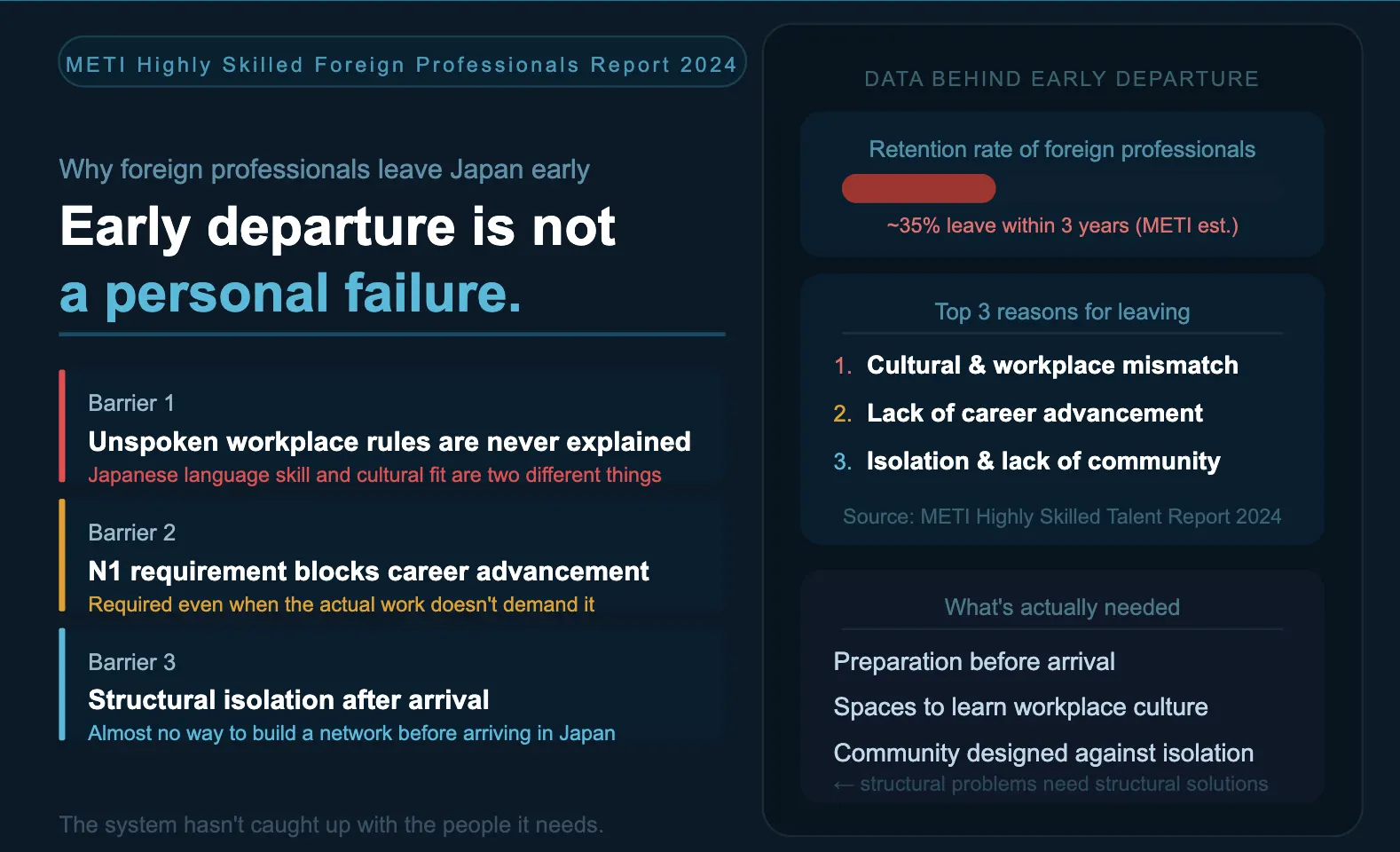
Why an estimated 35% leave Japan within three years
When people talk about foreign worker retention, the focus often goes straight to hiring. But retention is just as important. If someone is hired but cannot settle into the workplace, build a life, and keep growing professionally, then the talent pipeline is leaking. This is especially serious in Japan, where many industries and regions are already facing labor shortages and demographic decline.
Retention is not only about employment. It is also about daily life, social connection, and whether a person can imagine a future in Japan. That is why this issue matters not only to companies, but also to local communities.
Unwritten workplace rules create hidden barriers
One major challenge is the “unwritten rules” of Japanese workplaces. Even when a foreign employee has strong Japanese ability, they may still struggle with things that are never explicitly explained: how to bring up concerns, when to speak in meetings, how quickly to report bad news, or how much indirectness is expected in communication.
Japanese colleagues may assume these norms are obvious because they learned them over many years. But for newcomers, especially those from different workplace cultures, these expectations can remain invisible. The result is confusion, hesitation, and sometimes the feeling that they are always one step behind, even when their skills are strong.
How the N1 requirement becomes a gatekeeping tool
Another major barrier is the N1 requirement. In theory, a high Japanese-language standard can make sense for roles that truly need it. In practice, however, N1 is often used as a blanket screening condition, even when the actual job does not require that level of language proficiency.
This creates a serious mismatch. Someone may be fully capable of doing the work, but never get the chance because of a language label on the job posting. When that happens, the requirement stops being a support tool and becomes a gatekeeping tool. For Japan to attract more capable foreign professionals, employers need to ask a simple question: what level of Japanese is actually necessary for this job?
Why newcomers often become isolated after arrival
Isolation is another reason people leave. Many foreign workers arrive in Japan without a strong local network. They may not know who to ask for help, where to find peers, or how to talk openly about the stress they are carrying. Even if they are motivated and hardworking, the absence of a social support system can make everyday life much harder.
This matters because retention is not decided only inside the office. A person who cannot build relationships outside work often struggles to stay mentally healthy and professionally stable. In other words, a successful transition to life in Japan requires more than a contract; it requires a network.
Why retention is a system issue, not just an individual one
It is easy to say, “They should try harder” or “They need to improve their Japanese.” Of course, personal effort matters. But if we want people to stay, grow, and contribute over time, the receiving side must also change. Employers need clearer onboarding, more explicit communication, and more support after hiring. Communities need more opportunities for connection before and after arrival.
When the burden is placed only on the individual, retention will remain fragile. When responsibility is shared by workplaces, local communities, and support organizations, foreign professionals are far more likely to settle and succeed.
What Japan needs to do to attract and keep global talent
Japan does not only need to hire foreign talent. It needs to become a place where foreign talent can imagine a future. That means designing systems for onboarding, mentorship, daily life support, and community integration. It also means making workplace expectations visible instead of leaving everything to intuition.
If Japan wants to remain competitive, it must shift from “Can we recruit them?” to “Can we help them stay?” That is the real question behind retention.
How Red Look supports long-term international career integration
Red Look believes that language learning and career development should not be separated from community. People need places where they can practice, connect, and build confidence together. When Japanese and international members learn side by side, they also learn how to bridge the invisible gaps that often cause people to leave.
That is why we support a space where Japanese and foreign residents can grow together through international career learning, practical conversation, and real human connection.
In the Red Look community, we create space for learning, connecting, and building careers across languages and cultures.
You do not have to figure everything out alone—this is a place to start connecting.
NPO法人 Red Look
日本人、外国人双方の国際キャリア形成を通じた
持続可能な地域共生を目指して
Recommended for you
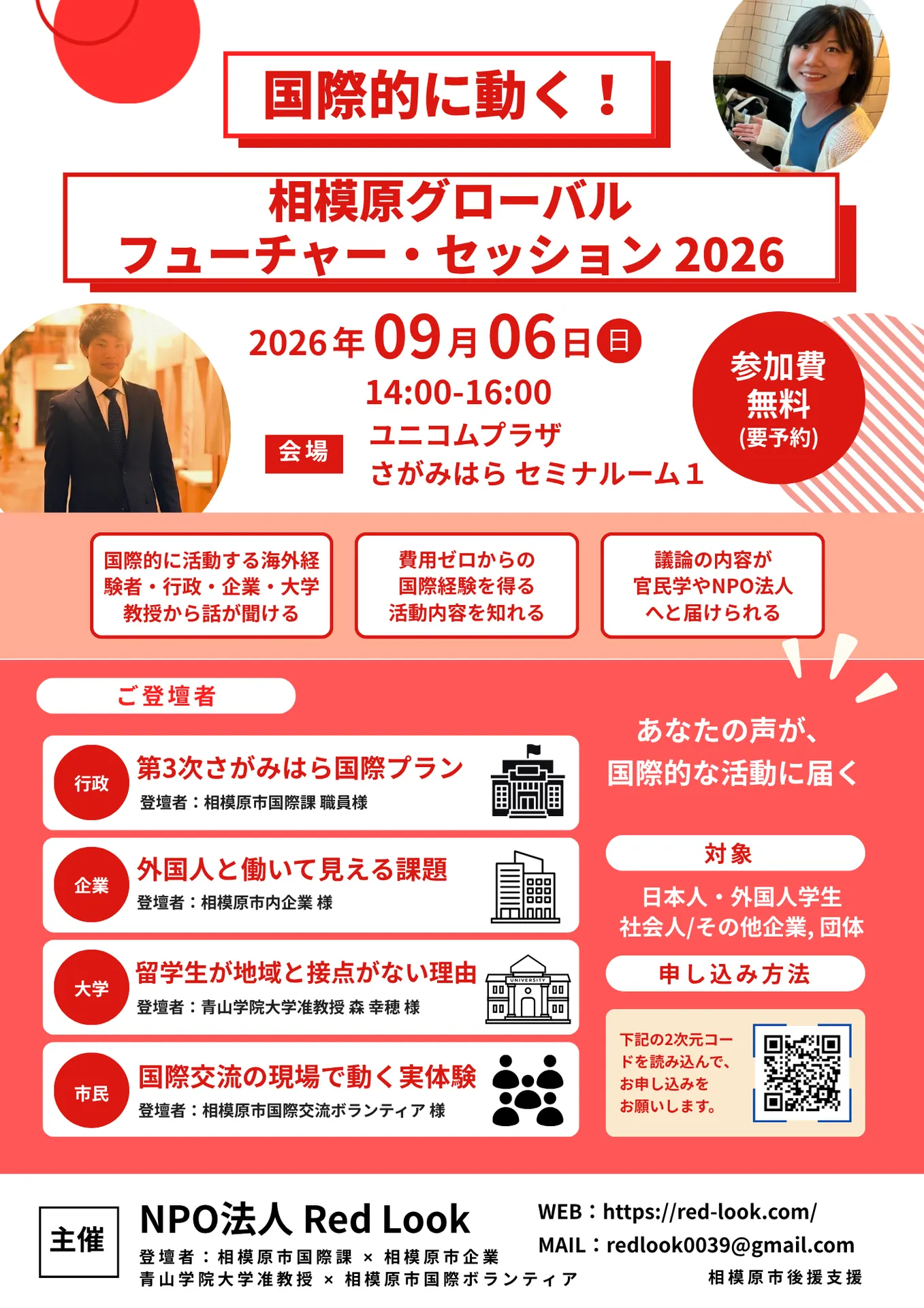
Sagamihara Global Future Session 2026: Connecting Multicultural Communities and Global Careers
2026-07-08
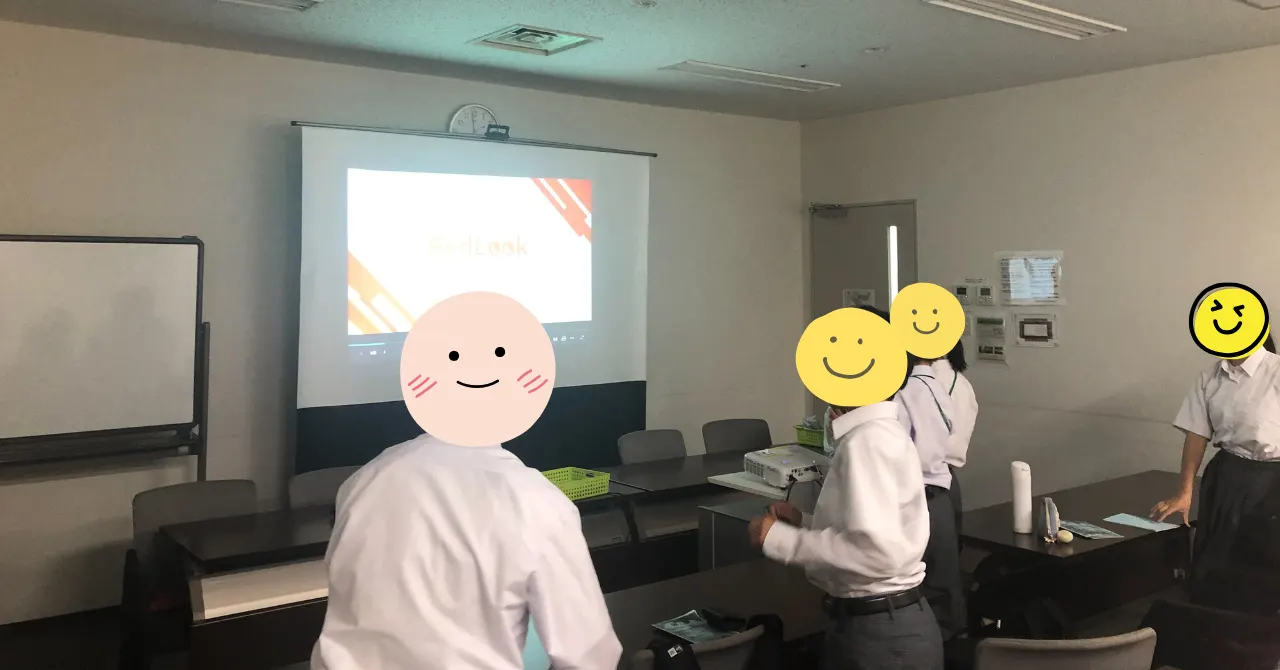
Connecting Junior High School Students with the World | Red Look Delivers an International Understanding Class in Sagamihara
2026-07-03

Studying Japanese but Can't Use It at Work? Red Hub Bridges Language Learning and Your Career in Japan
2026-04-17
Red Look's Next Chapter: Online Community, Government Partnerships, and a City-Endorsed Event in Sagamihara
2026-04-17
Why We Rebuilt Our Vision: From 'Local Job Support' to 'A World Where Everyone Can Connect Globally'
2026-04-16
Interested in working or studying abroad? We’re here to support you.
Red Look is a non-profit organization that helps Japanese individuals take on overseas challenges and supports foreign nationals finding careers in Japan. Our mentors and career coaches will guide you through your global journey. Reach out today!
Get Free Consultation