Blog
[2026 Update] How Will Japan’s Immigration, Permanent Residency, and Naturalization Rules Change?
A clear and practical overview for foreigners and overseas residents considering long-term stay, permanent residency, or naturalization in Japan, covering the immigration policy changes currently under discussion toward 2026. (※Proposal / under review)
 By Eric (Yutaro Akami)Representative Director, NPO Red LookPublished:
Contents
- [2026 Update] Japan’s Immigration, Permanent Residency, and Naturalization Rules: What May Change?
- Quick Action Checklist for Busy Readers
- 1. Japanese Language Requirement for Permanent Residency
- 2. Required Residency Period for Naturalization May Be Extended to 10 Years
- 3. Unpaid Taxes and Social Insurance May Directly Affect Visa Renewal
- 4. Stronger Rules, but Expanded Support for Integration
- Summary: What to Watch and How to Prepare
- About Red Look’s Online Community
[2026 Update] Japan’s Immigration, Permanent Residency, and Naturalization Rules: What May Change?
If you are considering long-term residence, permanent residency, or naturalization in Japan, there are important developments you should be aware of.
The current administration led by Sanae Takaichi is reviewing Japan’s foreign resident policies, and existing rules may become significantly stricter.
Important note:
As of January 20, 2026, these changes are still proposals under discussion.
No legal amendments have been finalized yet.
In this article, we explain the expected changes and practical countermeasures for those searching for
“how to migrate to Japan” or “how to move to Japan.”
Quick Action Checklist for Busy Readers
- Japanese language study: Aim for JLPT N2 level and prepare official certification
- Taxes & social insurance: Review past payments and keep records (consult early if unpaid)
- Residency & community records: Organize proof of long-term residence (resident certificates, employment contracts, community activities)
- Stay updated: Regularly check official sources such as the Ministry of Justice, Immigration Services Agency, and local government language support pages
1. Japanese Language Requirement for Permanent Residency
Until now, Japan’s permanent residency applications have mainly focused on factors such as:
- Good conduct
- Financial independence and stable income
However, a new policy proposal is considering the introduction of a Japanese language proficiency requirement.
-
What may change
Applicants may be required to demonstrate Japanese language ability sufficient for daily life and social participation — not just long-term residence. -
What you can do
If you are aiming for permanent residency, starting preparation for exams such as the JLPT (Japanese Language Proficiency Test) early will be a key step toward successfully migrating to Japan.
2. Required Residency Period for Naturalization May Be Extended to 10 Years
For those who wish to acquire Japanese nationality and live as Japanese citizens, this potential change is particularly significant.
- Current requirement: Continuous residence in Japan for at least 5 years
- Proposed change: Extension to 10 years or more
The background to this proposal is the government’s intention to more carefully assess long-term integration into Japanese society.
Naturalization is a major life decision. Staying informed and planning with a long-term perspective is essential.
3. Unpaid Taxes and Social Insurance May Directly Affect Visa Renewal
Another key focus of the proposed policy changes is strict enforcement of public obligations.
Important points
If you have unpaid obligations such as:
- Taxes
- National health insurance premiums
- Other public payments
your visa renewal may be denied.
After achieving “moving to Japan,” the most important thing is to comply with Japan’s rules. Even minor payment delays can have serious consequences for future renewals or permanent residency applications.
4. Stronger Rules, but Expanded Support for Integration
While requirements may become stricter, the Japanese government is also strengthening support to prevent foreign residents from becoming isolated.
- Japanese language support: Expansion of community-based language education programs
- Cultural and lifestyle support: Programs to help foreign residents understand Japanese customs and daily life
These initiatives represent positive steps toward a safer and more inclusive living environment in Japan.
Summary: What to Watch and How to Prepare
These policies are still being shaped, and final details will depend on upcoming elections and legislative discussions.
If you are planning to move to Japan, keep the following in mind:
What You Can Do Now
- Improve Japanese skills: Work toward JLPT certification
- Check public payments: Confirm there are no unpaid taxes or insurance fees
- Monitor policy updates: Follow political developments and immigration law revisions
To succeed in building a new life in Japan, flexibility and preparation are essential.
Take steady steps now to turn your dream of living in Japan into reality.
About Red Look’s Online Community
Red Look operates a membership-based online community.
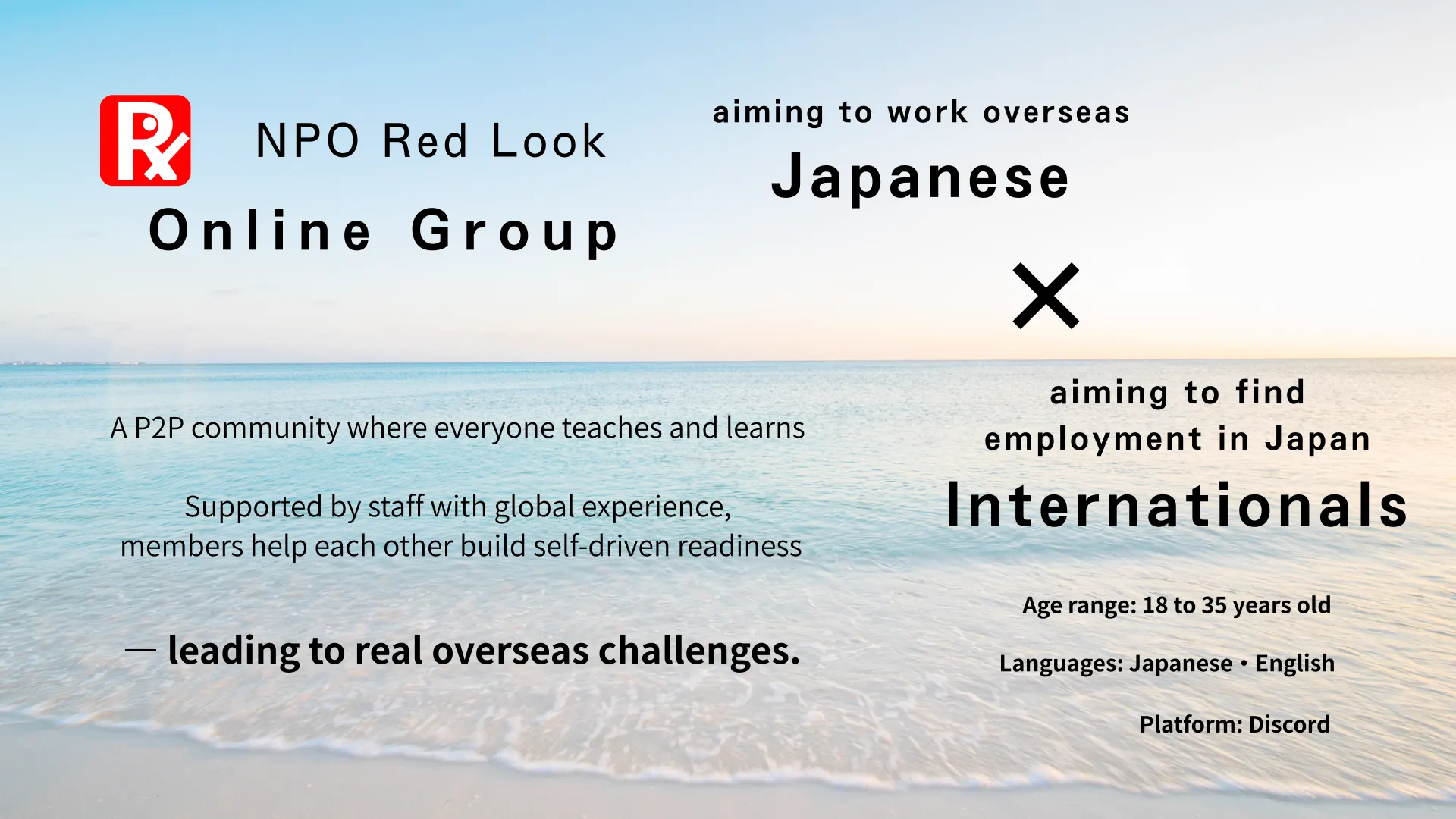
- Japanese professionals aiming to work abroad
- Foreign nationals seeking employment in Japan
Through Japanese and English, we create a peer-to-peer environment where people with shared career goals support and challenge each other.
Where to go next
Try talking at our weekly online exchange
A free online language exchange once a week, in English and Japanese. You don't need perfect English or Japanese.
Not sure which fits you? Take our free career assessment (about 8 minutes)
Eric (Yutaro Akami)
Representative Director, NPO Red Look
Founded and ran international communities in Canada, Germany, and Japan. Established NPO Red Look in 2025 and serves as its Representative Director.
About Red Look