Blog
How to Make Friends in Japan as a Foreigner: A Practical Guide From a Language Exchange Community
Making friends in Japan as an adult is hard, and it is not just you. Here is why it feels difficult, where people actually meet, how to get through your first event, and how to turn one conversation into a real friendship.
 By Eric (Yutaro Akami)Representative Director, NPO Red LookPublished:
Contents
Short answer: Most friendships in Japan start from repeated contact in a small, regular group — not from one big party. Pick one or two places where the same people show up every week or month (a language exchange, a hobby circle, a local international association, volunteering), keep going back, and suggest a small next step after the second or third meeting.
If you are struggling, you are not alone. In the Japanese government's FY2025 survey of foreign residents, 53.3% said they feel lonely at least occasionally (Immigration Services Agency, survey conducted Oct–Nov 2025).
Why it can feel hard to make friends in Japan
A few things make it harder than in many other countries:
- Work takes most of the week. Many adults' social lives revolve around their workplace and old school friends. If you are not part of either, there are fewer natural entry points.
- People are polite but reserved with strangers. A friendly chat does not automatically turn into an invitation. That is not rejection — it often just means the relationship needs more time.
- Language goes both ways. You may worry about your Japanese; many Japanese people worry about their English just as much. Both sides end up holding back.
- Friendships here often grow from a shared "place". A club, a class, a regular event. Without one, it is easy to meet many people once and no one twice.
The good news: all of these point to the same fix. Find a place you can return to.
Where people actually meet
| Where | Good for | Things to know |
|---|---|---|
| Language exchange events | Meeting Japanese people who want to talk with international people | Choose small, regular groups over large one-off parties so you see the same faces again |
| Hobby circles and classes | Friendships built around a shared interest (sports, music, cooking, hiking) | Ask at your local community center or search for groups in your area; Japanese is often used |
| Local international associations | Japanese classes, cultural events, and volunteers who welcome newcomers | Most prefectures and many cities have one. CLAIR keeps a list |
| Volunteering | Working side by side with locals toward something | Local festivals, clean-ups, and international associations often look for help |
| Online communities | Finding people in the same situation before you go out | Best as a bridge to meeting in person, not a replacement |
In Sagamihara, for example, the Sagamihara International Lounge runs Japanese classes, consultation for international residents, cultural exchange events, and volunteer programs.
What a language exchange is actually like
Red Look runs small language exchange events in Shibuya and Sagamihara, and a weekly one online. Here is how ours work, so you know what to expect from this kind of event:
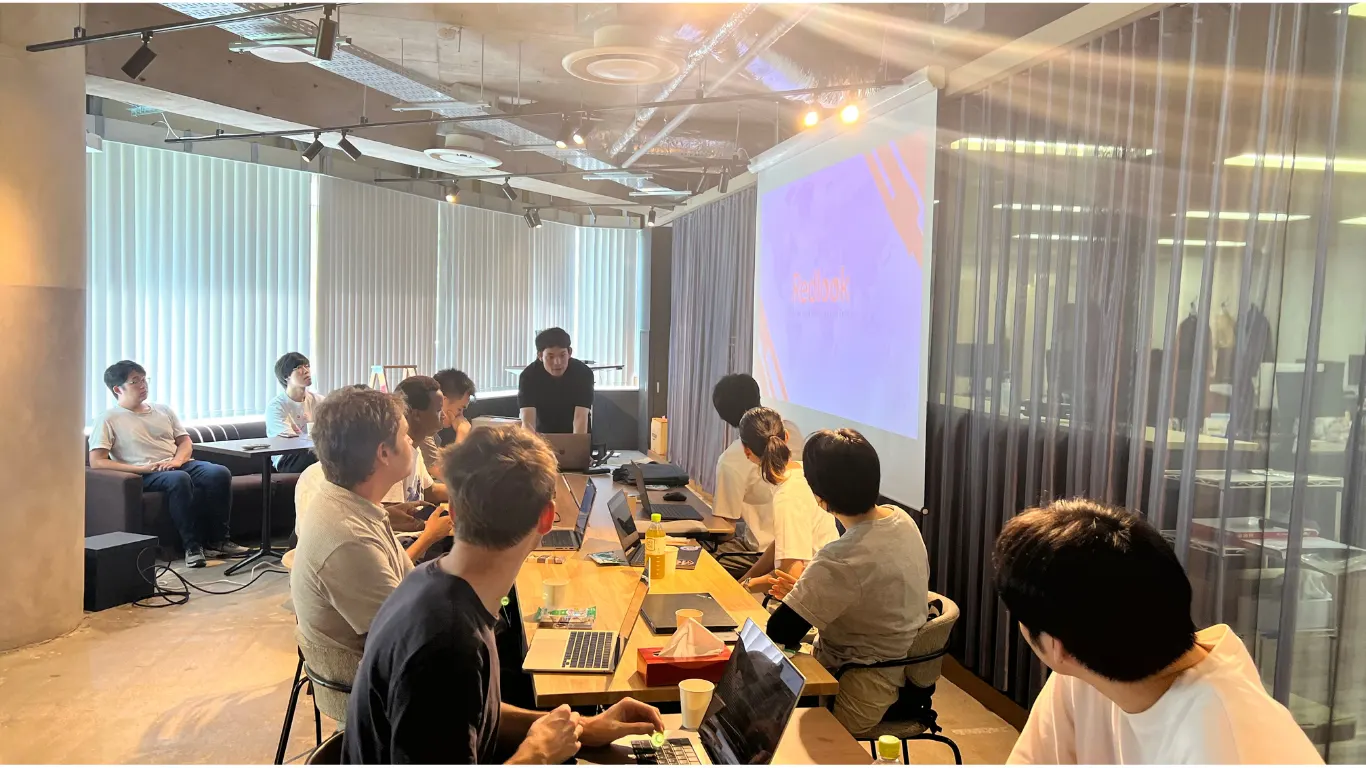 A Red Look in-person language exchange
- Small groups, not a big room. You talk with a few people at a table, so you do not have to work the crowd.
- Both languages. Japanese participants practice English, international participants practice Japanese, and people help each other. You do not need to be fluent in either.
- A topic to start from. In Sagamihara we use a "topic roulette": spin it, and talk about whatever comes up. It removes the "what do I say?" problem.
- Not a drinking party. The focus is conversation — about daily life, language, and careers.
- Coming alone is normal. Many people do.
What helps at your first event
- Prepare a 30-second introduction in both English and simple Japanese: your name, where you are from, what you do, and one thing you like. You will use it many times.
- Have two or three easy questions ready. "How long have you lived around here?" "Any food you'd recommend nearby?" "Why are you learning English?"
- Ask, then listen. People remember the person who was curious about them.
- Exchange contacts before you leave — LINE is the most common in Japan. Ask simply: "Can I add you on LINE?"
- Plan to come back. The second time is when it starts to feel different. People recognize you, and conversations go further.
Making Japanese friends vs. international friends
Both matter, and they help in different ways. Other international residents understand what you are going through and can share practical tips. Japanese friends help you understand the culture from the inside, practice the language, and feel part of the local community.
It is common to start with international friends because it is easier. Mixed groups — where Japanese and international people meet as equals — are one of the easiest ways to build both kinds of friendship at the same time.
Turning a first meeting into a friendship
- Follow up within a day or two. A short message — "It was nice talking with you yesterday!" — goes a long way.
- Suggest something small and specific. Coffee near the station, lunch, or the next event together. "Let's hang out sometime" rarely turns into a plan.
- Repeat. Friendship grows from many small meetings, not one big one.
- Be patient. Some people take longer to open up. Keep showing up.
FAQ
Is it hard for foreigners to make friends in Japan?
It can be, especially as a working adult without a school or club to belong to. But it is very possible. The people who build friendships usually join one or two regular groups and keep going back.
Where can I meet Japanese people who want to be friends?
Language exchange events are a good start, because the Japanese participants are there because they want to meet international people. Hobby circles, local international associations, and volunteering are also good options.
Do I need to speak Japanese to make Japanese friends?
Not at first. Many Japanese people want to practice English. But even a little Japanese makes people more comfortable, and it helps friendships go deeper over time.
What if I am too shy to go alone?
Many people come alone. Small-group events are easier than big parties. You can also start with an online language exchange from home, then join an in-person event once you feel ready.
Is it normal to feel lonely in Japan?
Yes. In the government's FY2025 survey, more than half of foreign residents said they feel lonely at least occasionally. It is common, and it usually gets better once you have a few people you see regularly. We wrote more about isolation and why people leave Japan in Why Do Foreign Workers Leave Japan?.
Sources
- Immigration Services Agency of Japan, FY2025 Basic Survey of Foreign Residents (summary, Japanese) — survey period Oct 17–Nov 9, 2025
- CLAIR, International Associations
Checked on October 6, 2026.
Come to a small, regular event
Red Look holds language exchange events in Shibuya and Sagamihara where Japanese and international people meet as equals, outside work and school. Events are usually free, and first-timers are welcome. If you are not nearby, our weekly online language exchange is an easy place to start.
Where to go next
Meet face to face in Shibuya and Sagamihara
Small-group language exchange and social events for Japanese and international people. Mostly free, and easy to join on your own.
Not sure which fits you? Take our free career assessment (about 8 minutes)
Eric (Yutaro Akami)
Representative Director, NPO Red Look
Founded and ran international communities in Canada, Germany, and Japan. Established NPO Red Look in 2025 and serves as its Representative Director.
About Red Look